We recognise as we go round the world that every six months or so that we will be servicing the winches. This regime hasn’t started yet and at the beginning of the week I was still very much a wench winch virgin.
We are fortunate to count as one of our friends Mat Jerram, who is a very experienced marine engineer, and as a friend Mat has imparted knowledge normally in exchange for copious food which has been a small price to pay. So on Sunday, as Maria was making roast dinner for all of us, he raises the fact that I have been talking about servicing the winches for a couple of years….and haven’t done it yet. Maria is twenty minutes from serving so it is enough time to break apart a winch and explain what to do! Mat explains the process really well and takes a look at the winches which have clearly not been properly serviced for some time (i.e long before we had the boat). There is a mass of grease on the entire winch mechanism and I now understand the process.
So the start of a new week and new jobs. I get the lewmar oil, grease and spare pawl springs, as recommended by Mat, and now will service all of the winches. I start with the one that Mat had broken up on Sunday on the coach roof. It all seems to be going fine as I clean up the winch using white spirit to remove the previous grease and grime. I am able to keep hold of the pawl springs and even they get a good clean. The whole winch was in a pretty bad state but not disastrous or close to failure. Having cleaned everything up, I apply oil to the pawls and move them around to spread it, they are moving really freely. I then apply the grease to the rest of the mechanism, a very thin layer so that it feels greasy to the touch but you cant really see the grease on it. Everything goes back together and I test the winch – all good. The second coach roof winch is in similar condition and the process is pretty much the same apart from the ping as one of the pawl springs goes flying from my hand across the boat and into the drink! Thank you Mat for suggesting that I get some spare springs. This winch is somewhat quicker since I know what I am doing. Quicker but ultimately flawed since it doesn’t work when I test it! I know exactly what I have done, one of the units with pawls could go either way and I haven’t put it back in the right way. Of course you don’t have to take the winch half apart to change this, the whole thing has to come apart to the base plate so that you can swap the part round the other way! Retest and success, two down….SIX to go!
I’m on a roll, so onto the big sheet winches, knock these out in a day (amongst the other things I have on) and then the four small winches should be easy. Unscrew the cap, take off the self tail mechanism and lift the casing off the mechanism. It moves a quarter of an inch. Stop being a wimp and lift it! Quarter of an inch again. Last try, all my strength, quarter of an inch! At this stage, you look around for something to beat the winch with in true Basil Fawlty style. Unfortunately there are no trees in the Marina, so I will have to come up with something else. I find a couple of blocks that I can rig as a block and tackle. and attach set this up to the boom which I have swung out and tied off above the winch. My trusty “red rope” (previously used for lifting outboards, freeing water filter caps and pulling pipes off through hull fittings) is at the fore as the attachment to the winch. I tie it off using a pipe hitch and a round turn and to half hitches to the block, the tail of the line is then used to provide a second lifting point on the other side of the winch so that the pull is straight up. I am ready to go and …..success….it moves half an inch! Success is measured in degrees when you have successfully lifted the whole winch by a quarter inch on three previous attempts. I was happy to get it to a half inch on the first attempt. Push it back down and pull again and it goes a bit further. I continue this making more and more progress until the casing comes clear 🙂 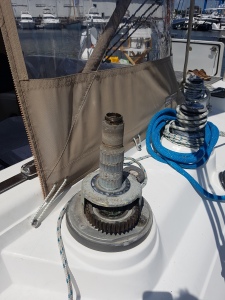 I now get to see what I have to deal with… The entire mechanism is glued together with calcium, salt and lots of old grease which has hardened. The whole thing was solid and it is difficult to see how the thing moved in the first place.
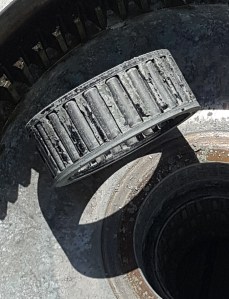 The bearings are equally bad with no movement. At this point I have to admit that the act of cleaning these things up and getting them back together is incredibly therapeutic and does give a great feeling of satisfaction when it is all back together again so thoroughly recommended. When I was young I used to try and fix broken alarm clocks. In common with a number of people I would take them apart and put them back together again, they never worked again and there were always a few spare parts lying around at the end of the process. It is important that this isn’t the case when rebuilding a winch! A nice way to try and stop this happening is to be very organised as the winch is taken apart.
 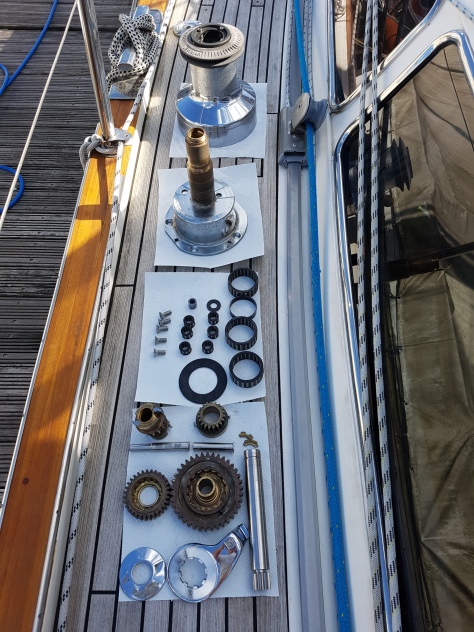 I laid out paper towel on the deck and had each group of parts on a single piece. I found this really helped to make sure that I put it back together in the same order as it came apart. As you can see, there was a lot of work required to clean these up and the whole process, with a few interruptions, takes a number of hours. There is no way I am getting the second one done on the same day.
The next day, I set about the other sheet winch. I have left the block and tackle rigged, I’m clearly going to need that. This is going smoothly and faster than the first. I get most of it apart quite quickly and I now have to remove five bolts, with alun key holes, that hold the tower casing onto the base. On the first winch these were tough cookies but my rachet set up is equal to the task. I get four off with quite a bit of effort and notice that some of them are a little rounded but they are off. The last one looks particularly tight and the hole looks even more rounded than some of the others. Even spraying with WD40 and PlusGas does not help this one to budge and as I try to shift it the wrench twists round and the alun key shaped hole is no longer alun key shaped but round 😦 For the moment I have to clean up everything that I can and reassemble the winch but I will need to drill out the bolt to finish this winch off.
The “half” clean up goes well and the winch works again so at least I can put it back together. I receive quite a bit of advice on how to get the remaining bolt out. Cut a slot in the top of it and use a flat head setup to get it off, the idea being there is more metal to push against. Another is to use a “screw extraction” set, which works by burying itself in the bolt and then as you tighten (it has a reverse thread), it loosens itself. This probably works best when the bolt is not stuck fast into the hole. I cant get the screw extraction tool to bight into the stainless steel bolt. Time for some help.
Lindsay is on board doing some changes in the engine room, more of that later, an offers to help me drill out the bolt. Drilling out stainless is not lightly taken on and the trick is to have the drill on a very slow setting and take your time. We drill out quite a wide hole so that we can get a large screw extractor in there. I had previously been using the ones that you screw into the bolt but Lindsay’s set is driven in hard. The large one works well and the head starts to move. Unfortunately the screw is stuck so tight that the head separates from the rest of the bolt but at least I am now in a position to get the winch apart. We use a smaller drill to get into the screw but this is still stuck hard so we have covered it with Plusgas which should help the bolt to loosen over twenty four hours. That said, the whole area had been lightly bathed in WD40 and plusgas for most of the previous 72 hours so it may not be enough. That still doesn’t work so we will be leaving the thread in their for a few weeks soaked in plusgas and have a go at a later date.
Having temporarily resolved the seized bolt issue, I can now continue with the servicing of this winch. This is as bad as the first with lots of cleaning required again to get it to a standard where you would be happy to reassemble.
Anyway, at least the other winches which should be uneventful since I have done the hardest ones first…. Or maybe not. we have eight winches dotted around the cockpit and another at the mast. Each pair in the cockpit are completely different and the mast is a two speed winch without a self tailor.
To be fair the servicing is not bad, except two of the winches are pretty much jammed due to lack of use and poor previous maintenance.

Before

After
That is easily resolved and it actually makes it more interesting when you have to work out how the winch is put together each time. Reassembly is also interesting and I was flummoxed for a few minutes when I put a winch back together and couldn’t drop the bolts into the cogs. On inspection, the whole was out by 2mm. Now that just isn’t possible, these things are precision engineered and when not covered in gunk go back together beautifully I worked out that I had put one of the mechanisms in upside down and the two “same-sized” cogs were actually slightly different sizes.
So I am done on the cockpit winches, lets start on the mast one! this is interesting and again completely different from any other winch I have done. For the first time, I take the winch casing off and something drops out – that shouldn’t be possible. It is a pawl, the part of the mechanism that gives the winch is familiar clicking sound. That’s not good. I get the winch assembly off the mast and onto the deck so I can see what needs to be done.
This winch is a two speed winch and it is the slower setting that has both Pawls broken. I have bought some spares and so can set about cleaning up the winch and getting it back to perfect working order. Now on my ninth winch, ten if you count one on a friends boat that I helped with, I am confident when putting it back together and it all works first time.
My top tips for winch servicing:
- Don’t be scared, things are not going to ping all over the place as soon as you take the case off.
- Remove everything slowly and make sure you hold the underneath, sometimes some of the components have others within them. You don’t want them falling out
- Read the service guide, the lewmar one has pictures
- I put my finger at the end as I lift the pawl out of place, this means that the spring hits your finger rather than pinging off into the water
- A very thin layer of grease but nowhere near the pawls and oil around the pawls. I had it so that they felt greasy but you couldn’t really see grease on them
- Take your time and clean everything really well, it will cost an extra five minutes but if you don’t do it you will know it every time you look at the winch
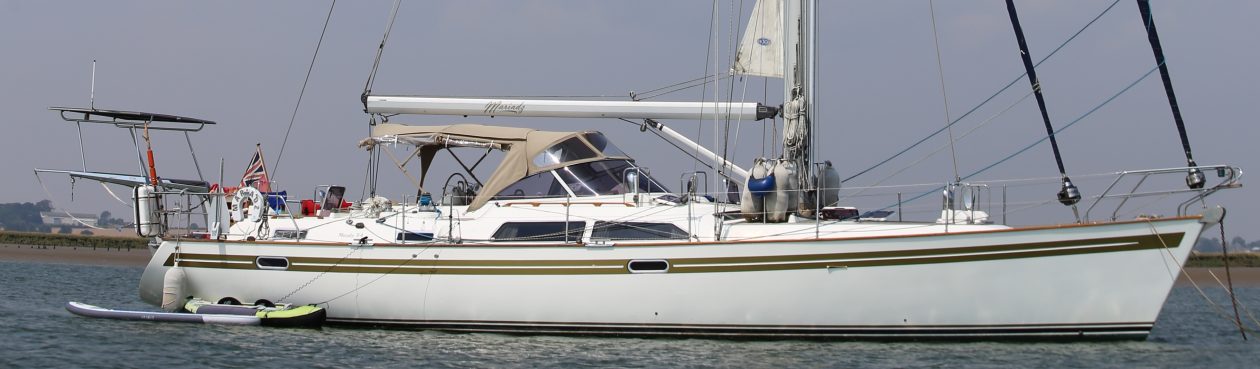
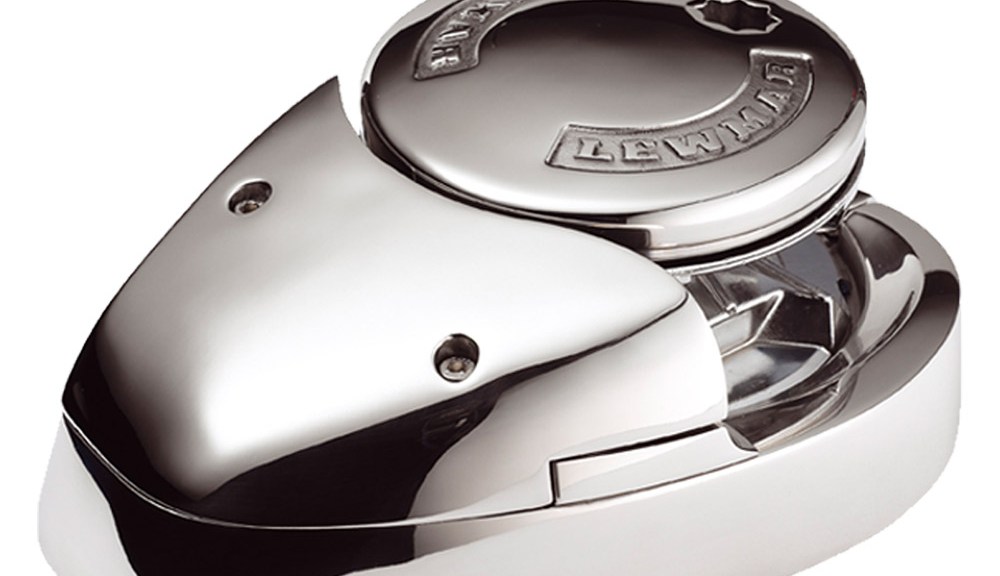
 To be fair, it was pretty much the only thing that worked as it should when we got the boat 🙂
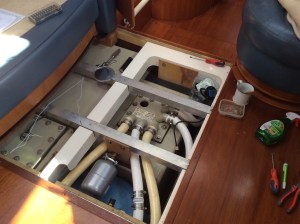 the smell was more pronounced. Oh dear, this is going to be nasty. Inspection around the holding tank showed that there was no leak, that was a relief. We also knew that the holding tank was empty since we had emptied it a few weeks ago. Over the last few years we had changed a lot of the pipes, hence the white pipes in the picture. The creamy coloured pipes are the remaining pipes but these appeared to be fine with no smell coming from them. We decide to try and trace where any gas is escaping the system by putting a fairy liquid solution across each of the pipes and around the top of the holding tank. This reveals that the “gas” is escaping from around the sender unit that shows whether the tank is full or not. It also revealed a small split in the pipe that led to the sea discharge, maybe this was enough to let the smell out? Rather than replacing the new and clean pipe we decided to put in a join and replace the split part with a new short length of pipe. This was uneventful, having heated the new pipe in a pan of hot water for a couple of minutes to ensure that the 38mm pipe went onto the 40mm fitting on the holding tank…. a snug fit! But we were not convinced that this constituted the full extent of the problem. We then decided to add some water to the tank and discovered that the tank was under pressure when I opened the pump out and heard air hissing. The setup on the Moody has two inputs from the two toilets, a deck pump out, a sea discharge and finally a breather pipe. With a breather pipe which works both ways, there should not be any pressure. This led us to do some investigation on the breather pipe to try and understand why there is pressure. Firstly we wanted to check that the breather pipe in the holding tank didn’t have a long downpipe (I.e. That the breather wasn’t connected to the pump out by mistake. Having checked which pipe was which and removed the tank inspection panel, it was time to hold your breath and open every window on the boat! That is definitely the smell…. but the pipes are the right way round – quick put it all back together again! Consulting the owner’s manual revealed where the breather pipe left the boat and it was interesting to see that this was a smaller pipe than the inch and a half pipe leaving the tank. A reducer somewhere perhaps? It also appeared that there was a join with another breather pipe…very confusing. The breather pipe goes forward and we can see it doesn’t come back at hull level, so maybe The return is high and is in the headlining? Removing fifteen screws allowed us to check that this wasn’t the case! Great now to put them all back again. But we are still confused as to how the breather is working. We decided to force air into the breather using a footpump from the tender. There was a bubbling coming from the sink! The grey water system linked to the black water system for a breather??? Surely we would get foul smells from the sinks.
 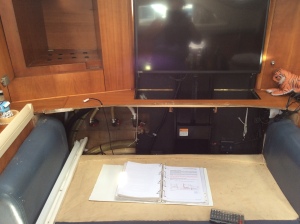 Tracing back the pipes revealed that the join in the breather pipes was from both grey water boxes and wasn’t linked to the black water breather at all. Back to the manual….and tracing the breather pipe forward behind the TV and up further forward. Check the hull to find a second breather, so the manual is incorrect and the pipe runs further forward. Ps, this breather isn’t the fuel breather which is adjacent to the fuel cap or the fresh water system breathers which are in the cockpit…
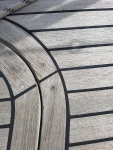 Some of these had clearly never been recessed, and so we wanted to cover these with teak plugs. I had borrowed a drill bit that was 10mm wide with an extended central point that makes the hole in the fibreglass under the teak but I was keen not to drill down too deep and was concerned that I wouldn’t have enough teak to hold the screw and allow me to cover it with a teak plug.


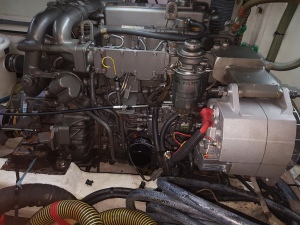
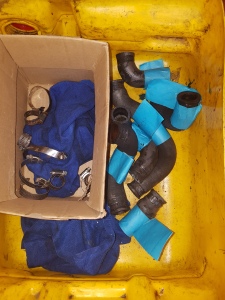 Some of them do not have great access so someone with small hands is best. Firstly Houghton It is very important to completely empty the coolant before you start! We don’t want a messy bilge…. Each removed pipe is labelled so that we know what we have replaced and jubilee clips are replaced as required. As part of this work, various engine parts were cleaned up or replaced including the thermostat. By the end of this process we will have a pretty new engine 🙂 it takes quite a bit of time to do all of this work.
 That said, the whole area had been lightly bathed in WD40 and plusgas for most of the previous 72 hours so it may not be enough. That still doesn’t work so we will be leaving the thread in their for a few weeks soaked in plusgas and have a go at a later date.
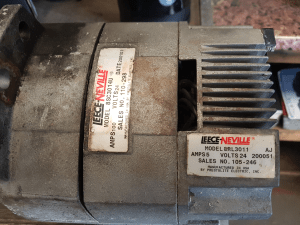 We had found that a bolt had sheered which held the casing of the alternator together. This had come out and had significantly damaged the vanes of the fan, which also explained the noise Maria heard. So we get the alternator off and I will take it to the local specialist to see what can be done. On investigation the alternator is fried and badly damaged which makes it uneconomical to repair. A replacement is available and should be with us within 24 hours.
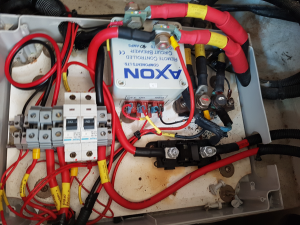 There is a problem, it appears the bolt holding the engine earth to the negative bar is loose (right hand side of picture). This has caused arcing between the cabling and therefore heat build up with some scorching. In fact one of the negatives has corroded and melted the insulation so much that it has melted through another wires insulation and these are welded together. That will be what caused our problems and it could even have been what damaged our alternator. In some respects we were probably lucky the alternator went rather than continuing to build the heat up and potentially start a fire under the bed. This doesn’t explain why the old alternator used to provide the earth to the engine and the new alternator doesn’t, despite being identical. The current view is that this was as a result of the damage to the alternator which provided that earthing thereby by-passing the corroded engine earth. But I will update with more information as it is available.
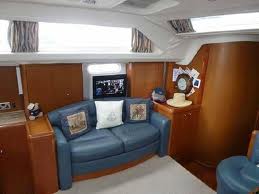 now we like watching TV sometimes but a) how will you see that from the other side of the room and b) who would want the TV on display the whole time anyway! When we had viewed the Moody 49, Mornin’ Gorgeous, prior to buying ours, we had admired the simple setup that hid the TV safely behind the seating.
 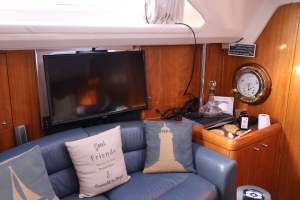 That was now our solution and it would allow us to have a large enough TV that we could both see and watch films on.
 So we looked at lifting cages with remote controls that would achieve the same goal, somewhat more stylishly. These cost more than the TV :(. But work really well and are more stable – quite useful for a boat 🙂 In the end we went for the
 ) and I had also bought an
  for our bedroom. These are very good quality TVs with excellent resolution, a built in HD Freeview and satellite tuner. I have also been very impressed with the customer service throughout the three year warranty period which has the TV collected and then returned by courier within a few days. I decided to go for the
  . Unfortunately, the original fitter for the lifter had kept the bars that allowed the larger TVs to be mounted so I needed to get some stainless bars made up by East Coast Stainless to help with the mounting. We are very pleased with the result, in fact the earth loop, the buzzing noise from the speaker, also does not happen with the Avtex – that was getting a little annoying!
 on some of the teak on board. This is a varnish-like finish that allows the wood to “breathe”. It also doesn’t need quite as much preparation as varnish with only a light sanding needed to get additional coats on. Once we are away, we will be doing this on a six-monthly basis to protect the wood and keep it looking good.
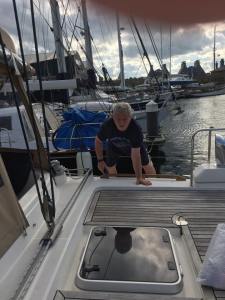 This would then give a smooth finish for the woodskin to soak into. However, it is best to do this with your eyes open and not how I appear in the photo!
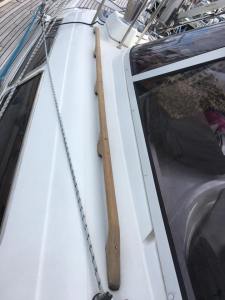 So I started this on the Friday and soon had the handrails back down to a finish that was more acceptable. Having had issues with the woodskin getting onto deck, stainless etc as part of the application, I decided to use masking tape across the bases of each of the handrails. This did take time, since I wanted to make sure that the tape was shaped around the curved handle and provided the protection needed. By late on Sunday, after a glorious sunny day, I was ready for the first coats of the woodskin. The plan would be to apply a minimum of four (light) coats but realistically as many as we can since the depth of colour and protection gets better with more coats. The touch dry time is 4 hours and then 24 hours for it to be fully dry, so a reasonable week of weather and it will be done. I apply the first coat on all four handrails and it looks great so I can settle down, relax and admire my handy work. Five hours later, the first of the rain hits 😦 grrrrh! Fortunately it looks like the woodskin was dry enough but we waited for everything to dry out before adding the additional coats. So three coats down and it has consistently rained five to six hours after I have done them!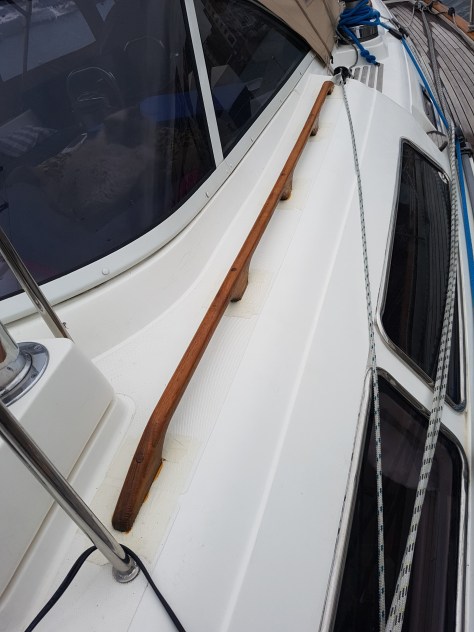

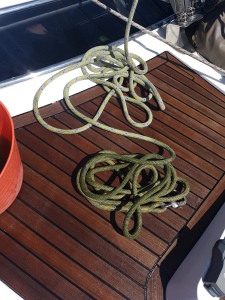 You know it is bad when you can’t tell what the colour the line was underneath the dirt! The picture shows mid way through cleaning, the bottom green part of the line had already been soaked for a while and was a lot cleaner than when it started – although still disgusting!
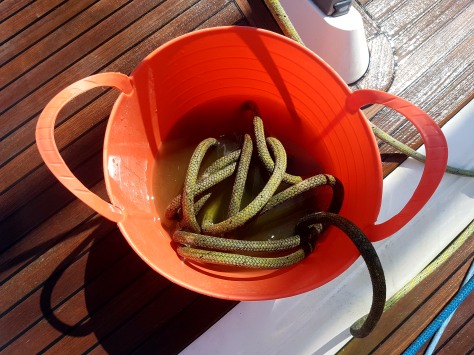 Our technique was to have a hot bucket of water with mild washing powder and fabric conditioner in it. Spray down the line with a hose to start with and then immerse it in the bucket for some time. Having given the water some time to get into the rope, I then painstakingly went through each metre of line with a soft brush, cleaning off the dirt.
 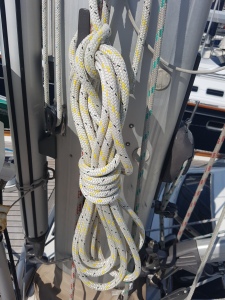 The final touch was to spray down the line with more cold water. It is tedious, hard work but very rewarding when you see the difference at the end, with the lines looking like new. They are also not stiff anymore so we should find that they work smoother and better than they did.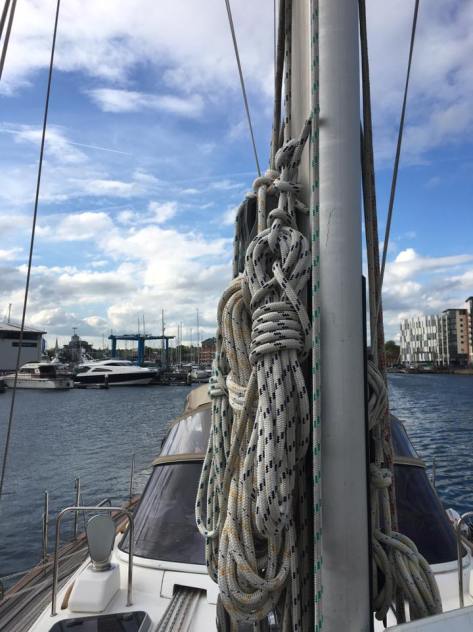

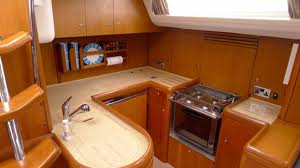 We are having to bite the bullet and come up with a better long term strategy for resolving the issue or we will be haunted with these problems for the rest of our lives. The first step is to perform a pressurisation test to try and see where the leak is located. By excluding parts of the system, such as the compressor, we can ensure that the rest of the pipework for the freezer (and fridge) are working as expected. If this proves that the pipework is in working order then we will change the compressor for a new one with air-cooling then when we come out in the summer for some other work, we can resolve the issues with the water cooling system. Fingers crossed this means that we will have finally solved the refrigeration problem!
 Mariadz