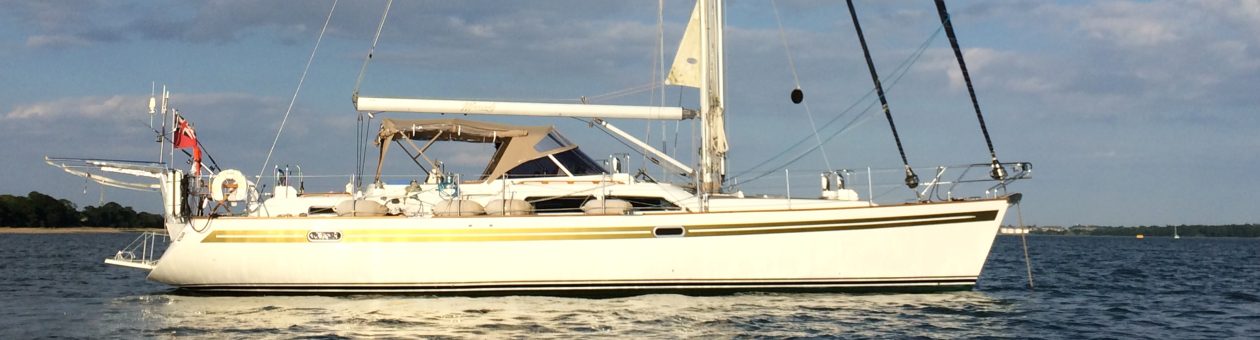

How good does that feel. We’re back on the boat. Olly has done an amazing job, and Lindsay and Stevie…., everything is back together (nearly) and the boat is ready for us to come back aboard. Now we start to see some of the benefit of the work we have done. The navigation will have to wait for our first trip out of the season in a few weeks but the electrical system is ready to go.
One thing we learn straight away is that the electrical changes have transformed our way of life, in the past, we have been heavily restricted by the capacity of the shore power. This is at 16A which isn’t bad for a marina but is 4kW of available power. A decent electrical fire is at least two kW. Put a kettle on, with background power usage, and suddenly you are taking a walk down the pontoon to reset the power or, if you are lucky, you are resetting a trip on the electrical board.
All these issues are a thing of the past, we have a 5kw invert charger which can provide 20A of power when we need it. 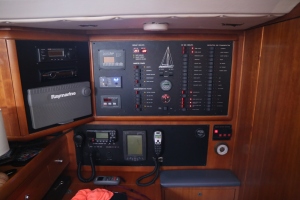 This is taken from the batteries, so it isn’t long term, but can take care of short term peaks. What it does mean that you can run an aircon unit, maybe a couple of fires, hair straighteners, hair dryer, fancy a cup of tea – no problem. 🙂
After this, the charger part of the victron takes over and puts power back into the battery.
We are loving the new system and it makes living the boat on the pontoon less constrained.

 We went with the e-xpert lite based on Olly’s recommendation. Over time, these type of monitors become less accurate though and need to be reset but they do provide useful data about what is happening right now such as amps in or out. However, anyone with an understanding of our approach to the refit will not be surprised that we would not be happy with a single way of measuring these things which could become inaccurate. There is another type of battery monitor which has a very complex algorithm within it and measures the battery itself to calculate a percentage of charge in the battery bank.
 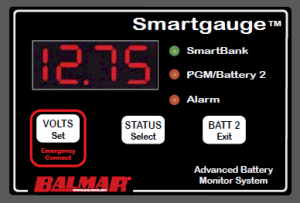 This system actually gets more accurate over time as the algorithm helps it to tune it’s settings to “learn” about the batteries it is monitoring. The combination of these two monitors gives us a powerful way of understanding our power use and state of charge. This will allow us to manage our power use much more effectively. We can monitor and adjust our power use and it will also help us to understand the effectiveness of our charging mechanisms: engine, shore power, generator and solar power. We will report on how well this works in practice in future posts.
 The victron had some good features but the Studer seemed to have a better reputation for quality. The clincher for us was the global support network. They are both good but there are several times more dealers and repair centres for Victron, so in the unlikely eventuality that we had a problem, it would be easier to repair.
 By choosing Lindsay at
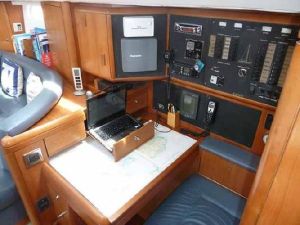 On the left hand side there were two chart plotters. The Raymarine was original fit and was linked to the similar unit in the cockpit. Around about 2010, AIS had been added and rather than upgrade the navigation a decision was taken to add an additional plotter to show the AIS information. Personally the thought of going below to check the AIS track of a large ship that may be on a collision course sounded like madness. Also with our plans to go round the world we didn’t expect the original navigation to last 25 years without trouble. So the decision was taken to upgrade the Raymarine navigation and remove the redundant setup. We considered other manufacturers but we have been comfortable with Raymarine equipment and so decided to stay loyal to the manufacturer, also thinking that it should be quite easy for us to understand how it worked since it would be an evolution from the equipment we were used to.
 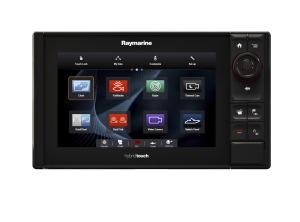 Of course an upgrade from that period meant that the existing radar set up would have to be replaced.
 Forward Facing Sonar (FFS) so that we can see exactly what is in front of us and hopefully therefore avoid hitting it! Now on the East Coast, where we have very shallow water and mud, there is an unwritten rule that if you haven’t touched the mud you probably aren’t really trying ;). We are very careful these days having touched the bottom once in the Dufour but I am guessing that running into a reef will be no laughing matter so FFS it is. It looked like the Echopilot was the best fit for us and integrated with everything else.
 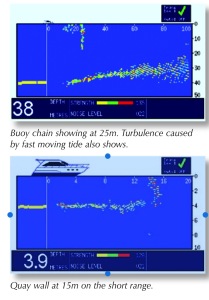 We have combined that with a 7inch plotter which will show this view to Maria at the helm. I am led to believe that the purchase of this equipment was no reflection of a lack of trust in my ability to tell Maria if we are going too shallow but a niggling doubt remains… 🙂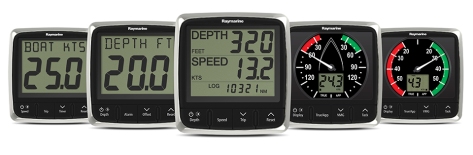

 which draw a tenth of the power. It was clear that this was something that was needed on the Moody immediately. We opted for warm white bulbs to give a softer light and these have been excellent. At the same time, we changed all of the navigation lights to LED too so at least our lighting is optimal.


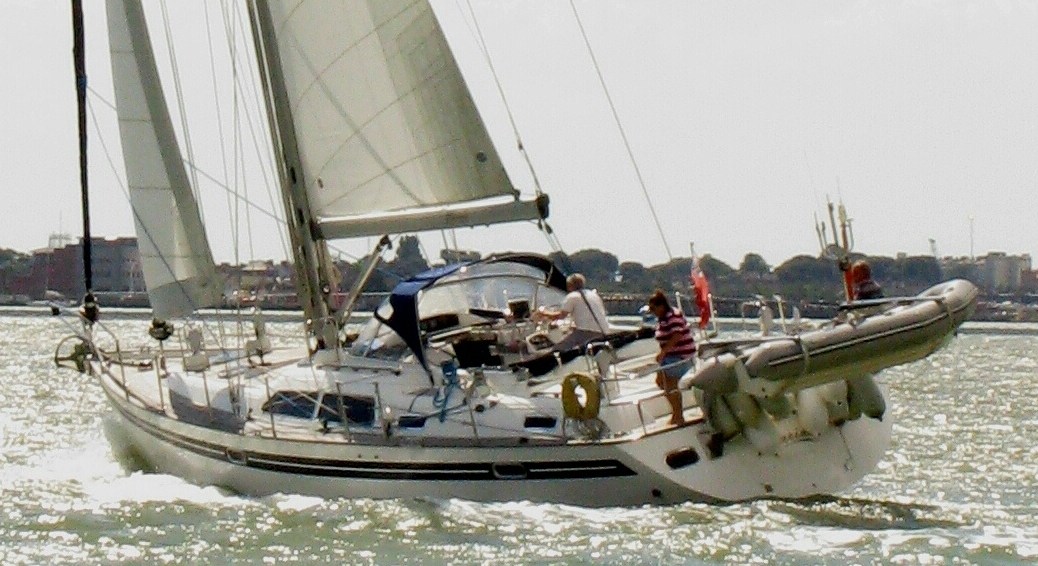
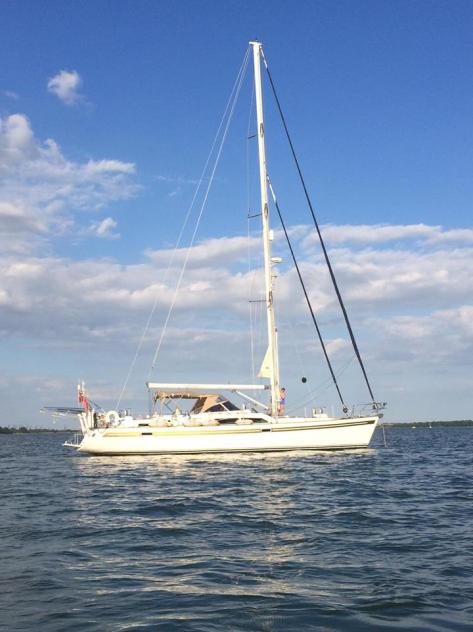


 The plan is that this beautiful holiday home (plug-plug) will rent out during the summer and the income for this will keep us in beans and rice. It’s a plan 🙂
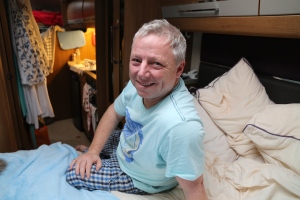
![IMG_3326[1]](https://mariadz.com/wp-content/uploads/2016/01/img_33261.jpg?w=258&h=193) This helps us with our frequent trips to Puglia and also gives us another retreat. It is an Autotrail tracker RB with a few creature comforts added. We will also document some of the fun and games we have in the motorhome. No prizes for guessing that it is also called Mariadz by the way 🙂
This helps us with our frequent trips to Puglia and also gives us another retreat. It is an Autotrail tracker RB with a few creature comforts added. We will also document some of the fun and games we have in the motorhome. No prizes for guessing that it is also called Mariadz by the way 🙂


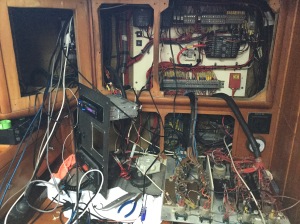 could be combined, moved and upgraded various pumps, set up the solar power, added a lot of battery monitoring, moved the aerials off of the Neptunes trident, added Maria’s new spreader lights…..you get the idea!
 Olly at SeaPower has continued to be brilliant and we know that he is trying to look after the boat as we would. Seapower aren’t the cheapest but they are also not silly expensive and I’m sure that Olly has cut down the hours he has charged us.
  The thing we need to remember is the unlit you of his work is the highest quality and you can be sure that he has your best interests at heart – at the end of the day that has to be the best recommendation.