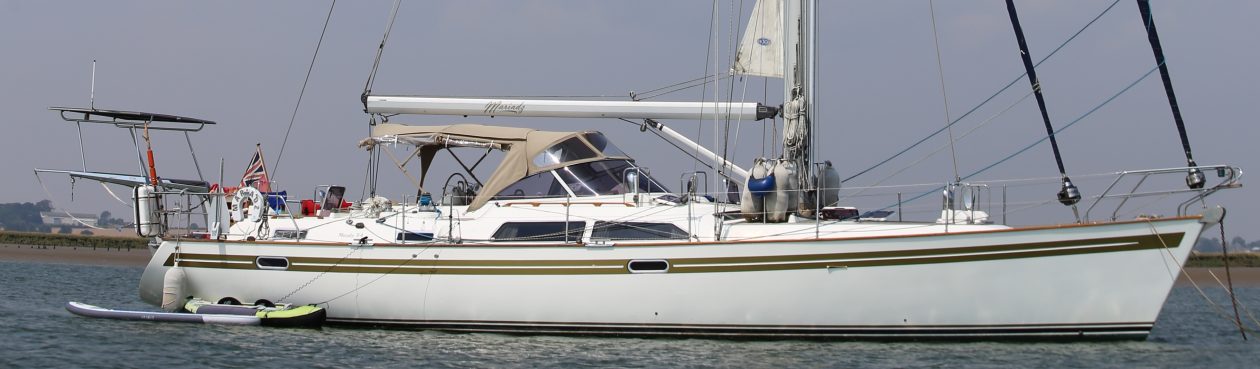

As part of the original fit of the Moody, it had come with an inverter, long since removed by a previous owner, and an HFL generator, which had been scrapped soon after our purchase because it didn’t work and was uneconomical to repair. The entire cooling system had corroded on the original 10.5 KVa generator and although it had a little over 700 hours, it had clearly always been problematic. It was also very noisy with ill fitting sound proof panels and we knew that we would have the same level of problems as the previous owners.
So the generator was removed and we considered our options. The generator had been sized to allow for all three air conditioning units to be on at the same time without causing an issue. We don’t expect to be running these very often at all and certainly not all three! We suspect what had happened to the generator apart from inadequate maintenance was that it had always been run at a low load hence causing problems with the engine that forms the core of the generator. Now despite the fact that we still have all three aircon units, a large microwave, watermaker and several other potentially high energy use items, we didn’t think this justified over-specifying the generator. But of course, we would need to cope with higher loads at times…..
A quality inverter charger was a good solution since it would seamlessly top up the power output from the batteries. This works fine when the high load is for a short period but needs to be watched if this lasts a long time. No-one wants to drain the entire battery bank in an hour! This allows the generator to be specified as a little lower power output which means it will more often be used at a reasonable load for the generator. I also means that you need to have good battery monitoring in place and more on that on another post.
Looking at a ten year timescale, we knew we needed to buy a quality product and two in particular stuck out for us: the studer, which had been bought by some good friends of ours ( Clare and Vic on Njord) and the Victron.  The victron had some good features but the Studer seemed to have a better reputation for quality. The clincher for us was the global support network. They are both good but there are several times more dealers and repair centres for Victron, so in the unlikely eventuality that we had a problem, it would be easier to repair.
Then we started looking at the generator. We did a lot of research on line and came down to a short list of Northern Lights, Kohler and Onan. There was little to choose between these but the supplier of our electrical systems were also Onan dealers and this helped to sway our minds. The fact that the generator was a difficult install which required it to be taken apart and taken in pieces to the engine room before being rebuilt was an added complication. By choosing Lindsay at Seapower who works closely with Ollie, meant that this could be done without invalidating the warranty on the generator.
The install is incredibly neat with a remote digital panel on the flight deck that Maria considers our new electrical panel to resemble. Having spent some time with Lindsay, I have to say we are happy both with our choice of generator and supplier. Lindsay has taken care making sure that our install will be trouble free for as long as we have the boat. One additional feature we added was to have the hot water from the cooling system feed the hot water boiler. The generator creates a lot of heat and it seems a shame to throw that away into the sea when it could be used o provide a useful source of hot water for us. It also means that we have redundancy in the hot water if the heating element breaks.
Sorry the pictures are all a bit boring, the key here is that everything is done under the surface so that the boat is powered well at anchor, at sea or in a marina with limited power.
Actually, an advantage we have found straight away in the Marina is that we no longer need to worry about switching off the electric fire when we want to boil the kettle. Previously this always tripped the switches but now the boat can support this for a short time from the batteries and then recharges the batteries later. We think this will be quite useful when we are away for small intense loads like the kettle or microwave although we need to be careful about the rate that we deplete the batteries as well as the amount of power we take out.

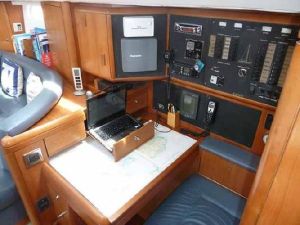 On the left hand side there were two chart plotters. The Raymarine was original fit and was linked to the similar unit in the cockpit. Around about 2010, AIS had been added and rather than upgrade the navigation a decision was taken to add an additional plotter to show the AIS information. Personally the thought of going below to check the AIS track of a large ship that may be on a collision course sounded like madness. Also with our plans to go round the world we didn’t expect the original navigation to last 25 years without trouble. So the decision was taken to upgrade the Raymarine navigation and remove the redundant setup. We considered other manufacturers but we have been comfortable with Raymarine equipment and so decided to stay loyal to the manufacturer, also thinking that it should be quite easy for us to understand how it worked since it would be an evolution from the equipment we were used to.
 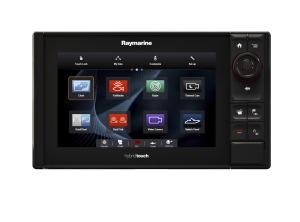 Of course an upgrade from that period meant that the existing radar set up would have to be replaced.
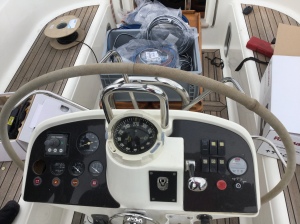 Forward Facing Sonar (FFS) so that we can see exactly what is in front of us and hopefully therefore avoid hitting it! Now on the East Coast, where we have very shallow water and mud, there is an unwritten rule that if you haven’t touched the mud you probably aren’t really trying ;). We are very careful these days having touched the bottom once in the Dufour but I am guessing that running into a reef will be no laughing matter so FFS it is. It looked like the Echopilot was the best fit for us and integrated with everything else.
 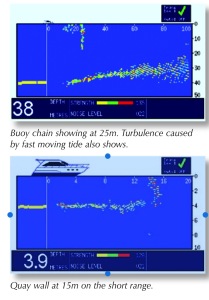 We have combined that with a 7inch plotter which will show this view to Maria at the helm. I am led to believe that the purchase of this equipment was no reflection of a lack of trust in my ability to tell Maria if we are going too shallow but a niggling doubt remains… 🙂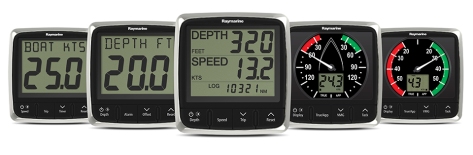


 which draw a tenth of the power. It was clear that this was something that was needed on the Moody immediately. We opted for warm white bulbs to give a softer light and these have been excellent. At the same time, we changed all of the navigation lights to LED too so at least our lighting is optimal.



 The two parts are quite different with the southern part being quite flat and filled with Olives. We found that Northern Puglia was served very well by Bari Airport, easily reached from the UK and the southern part by Brindisi airport, accessible from Stansted for us.
 Alberobello was a “must see” for us but it is a tourist centre and not somewhere that we would consider living despite its beauty.


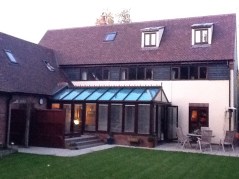
 The plan is that this beautiful holiday home (plug-plug) will rent out during the summer and the income for this will keep us in beans and rice. It’s a plan 🙂
![IMG_3326[1]](https://mariadz.com/wp-content/uploads/2016/01/img_33261.jpg?w=258&h=193) This helps us with our frequent trips to Puglia and also gives us another retreat. It is an Autotrail tracker RB with a few creature comforts added. We will also document some of the fun and games we have in the motorhome. No prizes for guessing that it is also called Mariadz by the way 🙂
This helps us with our frequent trips to Puglia and also gives us another retreat. It is an Autotrail tracker RB with a few creature comforts added. We will also document some of the fun and games we have in the motorhome. No prizes for guessing that it is also called Mariadz by the way 🙂


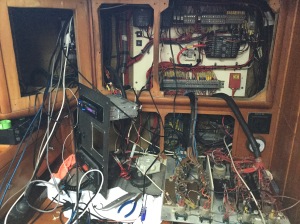 could be combined, moved and upgraded various pumps, set up the solar power, added a lot of battery monitoring, moved the aerials off of the Neptunes trident, added Maria’s new spreader lights…..you get the idea!
 Olly at SeaPower has continued to be brilliant and we know that he is trying to look after the boat as we would. Seapower aren’t the cheapest but they are also not silly expensive and I’m sure that Olly has cut down the hours he has charged us.
  The thing we need to remember is the unlit you of his work is the highest quality and you can be sure that he has your best interests at heart – at the end of the day that has to be the best recommendation.
