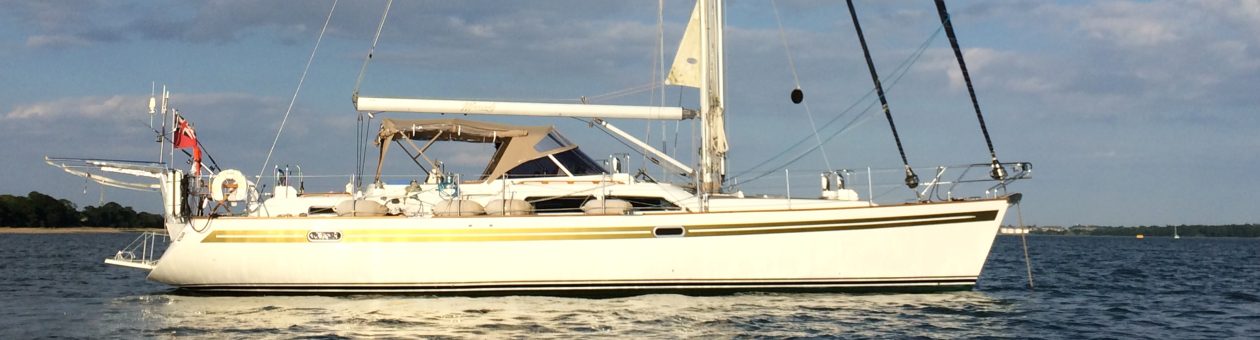
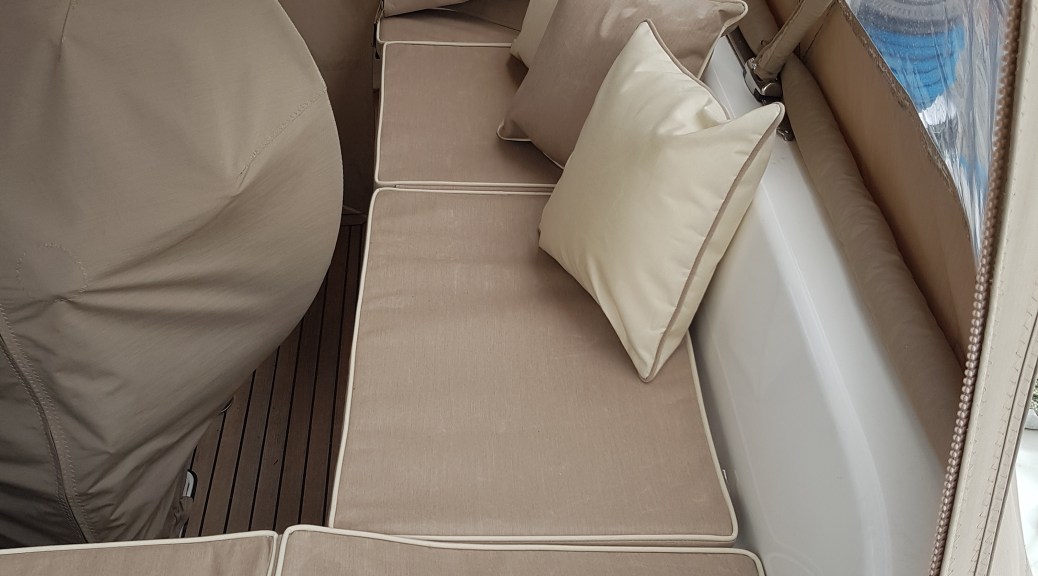
Mariadz had the same cockpit cushions for seventeen years and if we are honest they were a little “tired” and not as comfortable as they could be. We knew before we left on our big trip we would need to sort these out and Maria has also been keen to remove any semblance of the old, dated dark blue from the boat so she would be changing the colour at the same time.
Having reviewed a number of other people’s designs and after four years of our own use, we had a fair idea of what we wanted. A friend, James, has been doing canvas and cushion work around Ipswich and offered to help us. It was never going to be a simple job! Hopefully he doesn’t have too many regrets.
Looking at other centre cockpits, a number of people have seat cushions with a back that goes around the combing of the cockpit. This does look good but we felt although great as a seating area, it restricted us when using the cockpit as an entrance. It would be difficult to lift out the seat if it was covered by a back. This would mean that the cushions get stood on by outside dirty shoes. So we decided to mix it up.
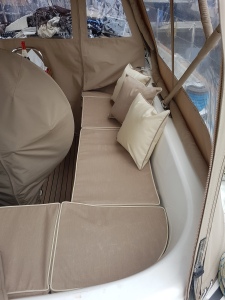 The design exercise was quite complex since we knew how the area was likely to be used. Just looking at the access areas for the cockpit made that clear. We have two side entrances and also access at the aft end of the cockpit. During the winter, most people come in via the aft entrance. We were keen to make sure that people didn’t stand on the seating, irrespective of the entrance and so a number of folding sections were incorporated so that these could be lifted to provide a step and to stop the cushions being spoilt. These folds were two at the aft area of the cockpit and one on each side. James incorporated a nice way of fixing these with Velcro underneath the seat and a flap which meant that the join was very strong and invisible when the seat was setup – much better than two cushions butted up to each other with Velcro on the edges. This works for all four entrances into the cockpit.
When we are sailing, our normal position is under the spray hood. 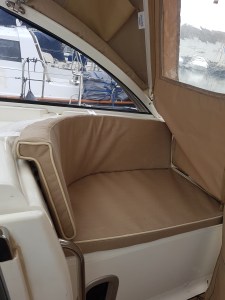 When I say “our”, I do mean Maria, Bonnie, Clyde and myself, since the cats like to be on deck when we sail. This area has full backs to make it comfortable but these were a real headache to get right with the curve of the cockpit and the shape of the back that cushions need to rest against. All other areas have a selection of loose cushions, in a couple of contrasting colours, that can be used for the backs. This gives flexibility and also means that when Maria sits behind the wheel steering with her feet, she is surrounded by comfy cushions.
So the design is finalised but colour is also important with cushions since a dark colour absorbs too much heat meaning you can’t sit on them comfortably and too light a colour attracts a lot of dirt and always looks mucky. Hopefully we have struck a nice balance with a shade of tan that matches the colour themes on the boat but hopefully won’t be too hot. If we ever get some decent weather in the UK, we will know for sure. Our final aesthetic feature was to have all of the cushions piped in a different colour to provide detailing and a contrast. This worked really well. These two colours reversed gave us our contrast cushions.

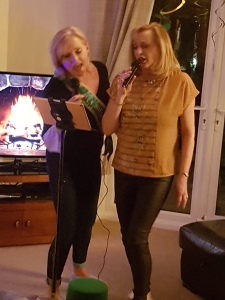 Sometimes she is brilliant and other times not quite at the top of her game. In the early days of our relationship, I probably didn’t go into this wholehearted. There was some recognition that I wasn’t the best singer! But now I give it my best shot, and I apologise for any bleeding ears brought on by my enthusiasm.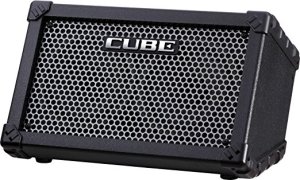

 – one of the few that I could find that had a wireless microphone and a wireless base station. You need this if the diva is going to be able to do her dance moves although she would probably prefer the whole Madonna headset!
 – something to hold the iPad with the lyrics on
 which the iPad can link to and remove a trip hazard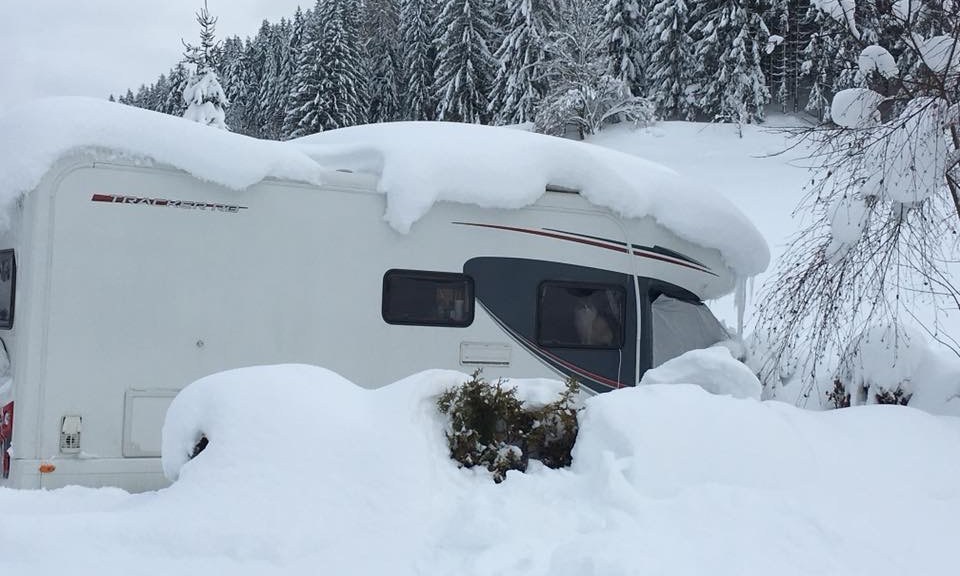
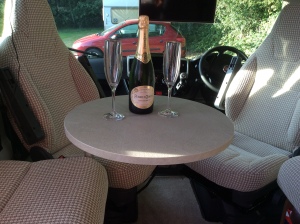 In our first few weeks of ownership, we found the small round table that spins out in the lounge area was failing. This is made from a very poor plywood which has several screws into it. Within a few days, these screws were wobbling and within a week the table was broken. We fixed this by using copious superglue in the screw holes. This seems to help bind the ply better and by putting the screws in when it is still tacky, a solid grip is provided for the screw. In the two and a half years since, we have not had an issue with the table, although we had to do the same thing to the bracket that attaches the table foot to the seating. Again this seems to have held up well.
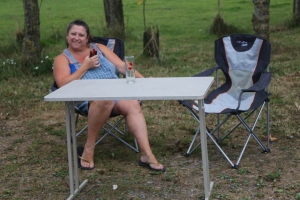 sofas in the lounge. We selected the optional travel seats in the lounge and so have an L-shaped sofa. It means the legs of the table do not fit in the space without removing seats, very poor design. It does work well outside though! However, on Mariadz we have a teak table that we use either in the cockpit or the aft deck. This fits perfectly and also fits in the storage
 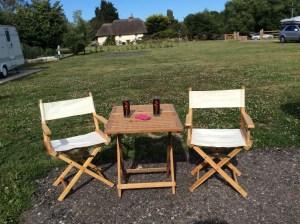 area at the back of the van. The only thing we need to do is move the locking bar that stops the table coming out when you are travelling or at the very least but something to heavy to block it.
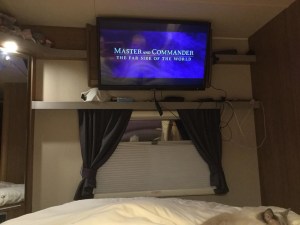 we still had a cello 32in 12v TV in a box and rather than buying a new TV decided to fit this in the bedroom, it is a bit big but means you do get the full cinema experience in the bedroom 🙂 we also often use a bose soundlink to provide the sound since the TV sound is quite poor.
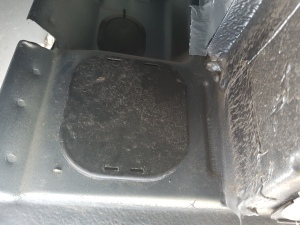 Fortunately, Fiat have the answer, there is a blanking plate (part number 1355707080) you can fit on the outside of the van replacing the ventilation and it stops the draft! You just have to remember to remove the panel that is there and put the blanking plate in the hole rather than treating it as a lid to the existing vent.
 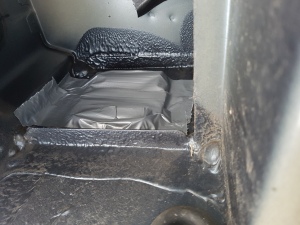 Bit of personal experience for you there. The alternative and low tech option is to cover the vent with tape to stop the valve opening!
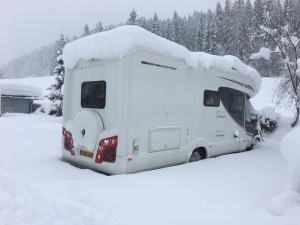 This screen also provides insulation for the windscreen which can be a major loss of heat, although with the sun screens on the inside we find it better. The picture shows this fitted when we are buried in snow.
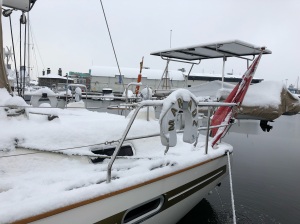 Now I have to say that my first thought on this was that it was a woman that we met in a Colchester night club, that I needed Maria to protect me from! But no, apparently, it is from Siberia, freezing cold and dumps a load of rubbish on you. So completely different then!
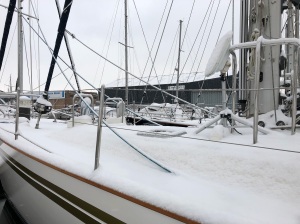 We often get asked how we survive winters on the boat, surely we get cold! The answer has always been that we have heating, however, this winter is sorely testing our heating setup.
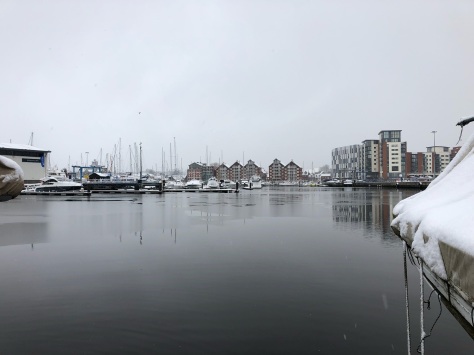 Reverse cycle air conditioning isn’t the most efficient system either and I suspect the fact that the water in the marina is frozen in places is not helping. So we use a combination of a couple of air con units boosted from time to time by the Dyson heater. The other useful item for our comfort is the heated blanket on our bed which has individual controls for each side. This goes on early evening, makes the bed warm for bedtime and keeps it lovely and warm all night.
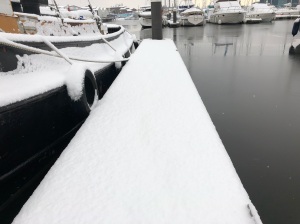 we’re accustomed to a bit of snow and the few inches we got in the first few days was less than the light snow we had just before leaving Austria. In Austria, that didn’t take much effort to clear but in the UK the story is very different. Fortunately we have the land cruiser to drive around but the roads are terrible around the marina and in Ipswich itself. The pontoons will of course get more treacherous as the snow melts and refreezes overnight. Our snow boots will be tested then.
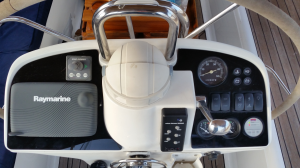 We had spoken to Lindsay at Seapower about this some time ago and there was concern that we may need to replace the entire throttle control with a completely new and very different unit. The first job though was to check that we didn’t have issues with the throttle cable and particularly the gear cable that allows you to select between forward, neutral and astern. This was one of the jobs arranged for while we were away skiing in Austria. On our return from holiday, Maria was planning to turn the boat around so she was bows-to the pontoon. This is our preferred wat round and gives her a nice view over the stern to Ipswich Centre. It provided us an opportunity to test the new setup. After the work was done, there was a complete lack of swearing when Maria was turning the boat around so I think we have a result!
 To avoid this problem, we took the decision to buy a generator with a lower power output (7kW) so that we were always using a high proportion of its capacity. In the few instances where we need more than this for a very short period, the inverter charger could pull from the batteries but this was likely to be for seconds and so wouldn’t impact the batteries too much.
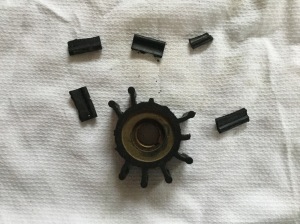 This has been in place exactly two years and had around 70 hours of use so a little worrying. Of course a broken impeller is not good news and we are grateful that the generator hadn’t overheated because of the lack of water flowing through the system. We are now investigating what has happened but I understand that we may need to be more careful at checking the generator when it hasn’t been used for a little while. I suspect more frequent changes of impeller will be required too.
 Mariadz